Ideas from the work
How to Make Your Service Business Marketing Sound Like You
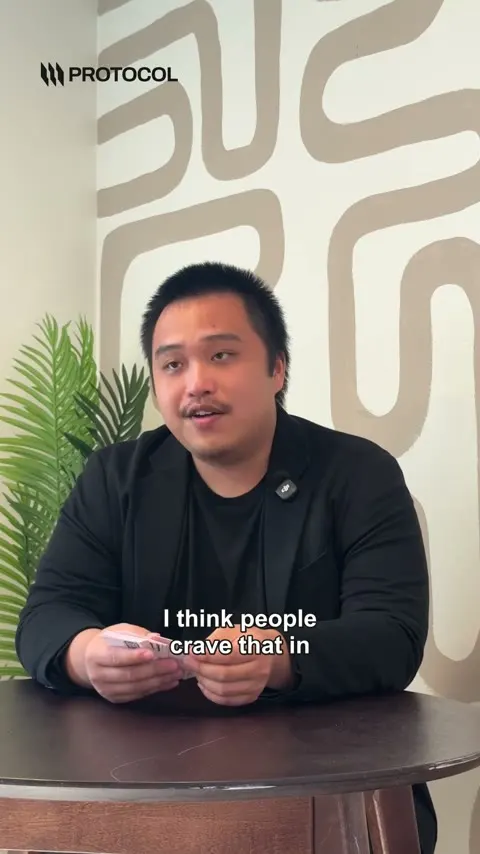
Start with the way you explain your work to one person. Take a real customer question, answer it out loud, and keep the words that make your answer useful. You can clean up the repetition without replacing your voice. I think people still crave human connection, and your marketing should give them a sense of the person they'll be talking to.
By Eric Yim, Protocol Text, a marketing business based in Lincoln, Nebraska.
Why I think people want that personal connection
A lot of people I've talked to are very personable. I think people want that. There's been a huge shift away from personal connection, and I think there's going to be a huge pendulum swinging back toward it. That's my belief about where things are going, not a promise about what any individual post will accomplish.
For an independent service business, the practical question is what a prospective customer can learn about you before they call. Can they understand how you explain a problem? Can they see what you'd want to know before recommending something? A post can give them a small, useful example of that conversation.
That's why I'm going out to people in person and asking them what their story is. Right now, I want to hear it face-to-face so I can tell it. I don't know if that approach will stay the same forever. But listening to how someone actually talks matters to me, because a form alone may miss the explanation that makes their work understandable.
Keep your explanation, not every spoken word
Sounding like yourself doesn't mean publishing a transcript exactly as you said it. Spoken answers have false starts and repeated thoughts. Editing those out helps the reader. The trouble starts when the edit also removes the useful details and replaces familiar words with formal ones you'd never say.
Keep the terms you use with customers, but explain any trade language. Keep the reason behind your recommendation. If your answer depends on something, keep that condition too. Removing it to make a stronger claim can change the meaning.
Here's a useful check: read the draft aloud and imagine saying it across a table. If a sentence feels uncomfortable, ask what's wrong. Is the wording too stiff? Is it making a promise you wouldn't make in person? Fix that sentence rather than adding a casual greeting to an otherwise generic post.
Turn one customer question into a useful post
I'd start with a question you've actually been asked, rather than a broad topic like quality or customer service. A specific question gives you something concrete to explain. You don't have to tell your whole business story every time.
- Write down the question. Leave out the customer's identity and any private details. Keep the part that another prospective customer might also need answered.
- Answer it out loud. Explain what you'd need to know, what affects your answer, and what the person could do next. Don't try to sound like an advertisement.
- Edit for the reader. Put the direct answer first. Remove repetition, explain unfamiliar terms, and check every claim. Keep the words you'd comfortably use in conversation.
For an illustrative example, imagine a service provider answering, “Can you give me a price from a photo?” A generic draft might say, “We provide personalized solutions and exceptional customer care.” That doesn't answer the question.
A more useful draft, if it matches that provider's actual process, could say: “A photo can help me understand what you're asking about. If it doesn't show enough to price the work, I'll explain what else I need before giving you a number.” This is a writing example, not a claim about completed client work.
The useful difference is the explanation. It tells the reader what the photo can do and where its limits are. It also sounds like something a person could say.
Use technology without losing the person
I believe in combining personal connection with technology. At Protocol Text, that combination is part of how I think about the work. Spending time with someone and using technology don't have to compete.
As a practical approach, software can help organize your notes or turn a spoken answer into a draft. You still need to check whether that draft says what you meant. Pay particular attention to added promises, missing conditions, and wording that could belong to almost any business.
You also don't need to force every interaction into an in-person meeting. My current approach reflects what I'm able to give right now. For your business, choose a way of listening that you can sustain. A short conversation can provide useful material if you pay attention to the actual question.
Frequently asked questions
Can I sound personable without sharing my private life?
Yes. Explain a decision, answer a common question, or describe what information helps you assess a request. Those details show how you think without exposing your family, routines, or customers. Before posting an example, remove identifying details and get permission for any customer material you want to use.
What should I give someone who's writing marketing for me?
Give them a short recording of you answering a real question, the facts they're allowed to use, and any limits on what you can promise. Ask them to preserve your explanation and familiar wording. Review the draft for accuracy before reviewing it for polish, especially if they've added examples or recommendations.
How can I tell whether this approach is helping?
Look for practical signals: prospects referring to a post, asking more informed questions, or mentioning that an explanation helped them decide to contact you. You can ask new inquiries what brought them in. Don't expect immediate results or treat one post's likes as proof. Review patterns across several posts and conversations before deciding what to change.